Buckram for Shirt Collars, Cuffs & Kurta Ban: How to Choose
A buying guide by Sadiq Interlinings · Gujranwala, Pakistan
The right buckram for shirt collars supports the shape you want without making the finished collar unnecessarily rigid. Choose it against the actual shirt fabric, the required hand feel and the garment’s care routine—not GSM alone. For a kurta ban, cuff or placket, approve a sewn and washed sample before ordering bulk material.
A formal shirt collar and a casual kurta ban can both need structure, but they do not need to feel the same. That is where buying simply “hard buckram” becomes a problem: it describes a preference, not a complete specification.
This guide takes you from that first request to a sensible shortlist. We explain the local terminology, compare three articles from our woven fusible range and set out the checks worth making before production.
In this guide
First, be clear about which buckram you mean
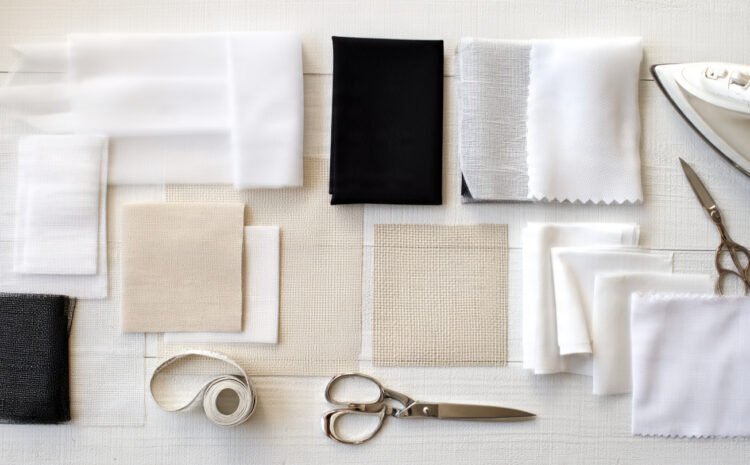
In Pakistan’s garment trade, buckram—also written bukram—is commonly used for the supporting material inside collars, cuffs and ban patti. An international buyer may describe the same requirement as woven fusible interlining, collar interlining or fusible interfacing.
The name alone is not enough. Buckram sold for millinery, bookbinding or crafts is not automatically suitable for a washable shirt. Some support fabrics are sewn in; fusible grades have an adhesive coating that bonds to a compatible face fabric under the appropriate process conditions.
The three Sadiq articles compared below are 100% cotton-base woven fusible interlinings with HDPE adhesive. “Cotton base” describes their fabric substrate; it does not mean the finished, adhesive-coated material contains cotton alone.
For the wider terminology and material families, start with our buckram fabric guide for Pakistan. Here, the focus is narrower: choosing support for the parts of a shirt or kurta that need to hold their shape.
Choose the finished feel, then choose the grade
Formal shirt collars: definition without an awkward fold
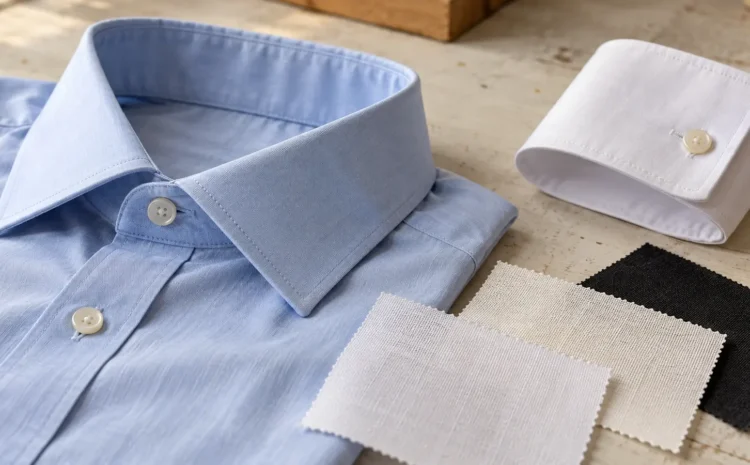
For a crisp formal collar, consider the collar leaf, its points and the stand around the neck. A firm grade may suit the intended silhouette, but check how the finished collar folds and how the stand feels when buttoned. More stiffness is not an improvement if it fights the shirt’s fabric or makes the neckline uncomfortable.
Compare samples in the actual shirting—not on the interlining roll alone. Include the intended seam allowances, stitching and any second layer of support in the trial.
Casual shirts: enough body to look tidy
A relaxed shirt often needs a softer result than a formal uniform shirt. Start by comparing a more flexible grade against the next firmer option. The useful question is not “Which one feels strongest?” but “Which one gives this collar the right shape when worn?”
Very fine, sheer, stretch or heat-sensitive fabrics need their own trials. A cotton woven buckram that works on one shirting is not a universal choice for lawn, silk-like fabrics or knitted garments.
Kurta ban and shalwar kameez patti: judge them at the neckline
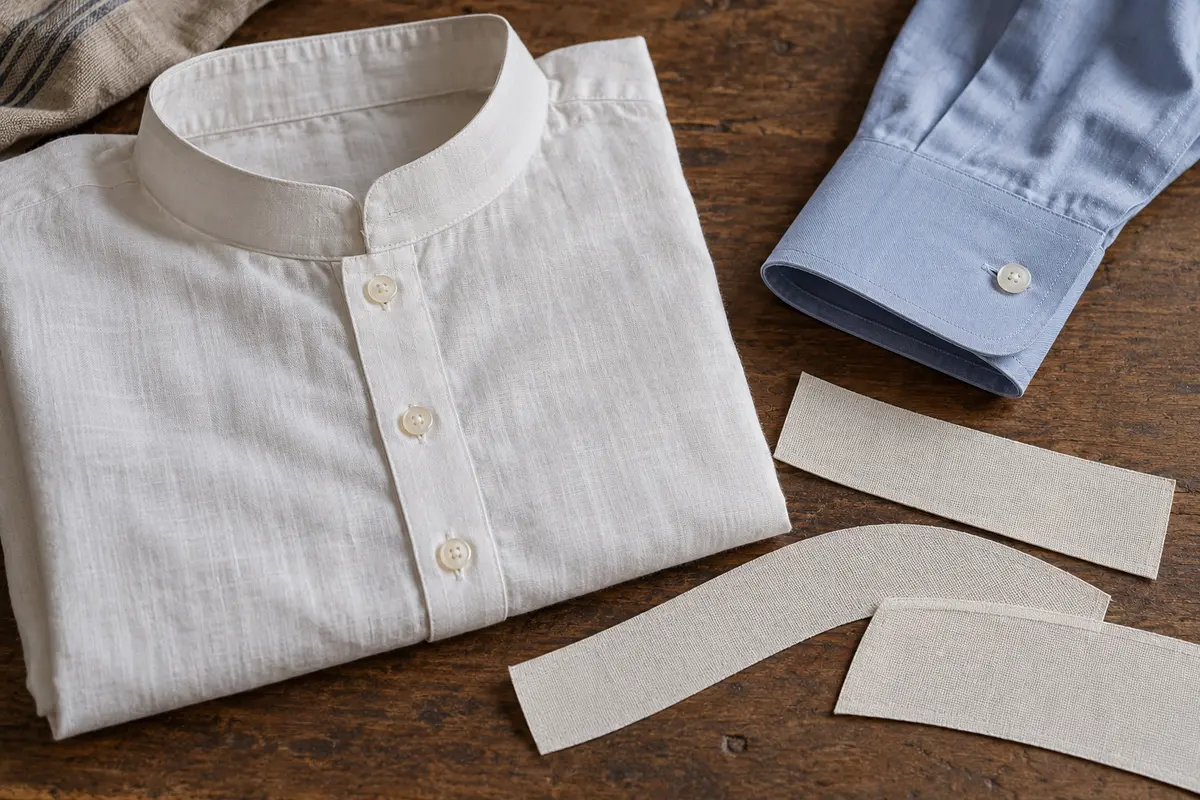
A standing ban needs definition, but it also sits close to the neck. Make a complete neckline sample, button it and assess its curve, height and comfort. For the front patti or placket, check that it lies neatly against the body fabric instead of becoming a rigid strip.
The same thinking applies to a kurti band or a structured pocket opening: support should serve the design. Do not assume that every component in one garment needs the same weight or finish.
Cuffs and plackets: watch the folded layers
Cuffs need to hold their outline while bending comfortably around the wrist. Plackets need enough support for clean buttonholes without excessive bulk. Inspect the turned edges, corners and seam intersections; a flat swatch can hide problems that only appear after sewing.
Why GSM is not a hardness rating
GSM measures mass per square metre, not stiffness. Base construction, finishing, adhesive and the face fabric all contribute to the feel of the assembled component. A heavier article is not automatically the better choice.
There is a useful example in our own range: SC-2016 and SC-2018 ROSE are both listed at 202 GSM, but their finishes are Medium Hard Touch and Hard Touch respectively. Matching the number on the label would miss that difference.
“Medium soft”, “medium hard” and “hard touch” are practical descriptions for comparing grades, not universal measurements that every supplier uses identically. Keep an approved physical sample as the reference for repeat orders. Our guide to GSM, stiffness and resin coating explains the relationship in more detail.
Three Sadiq grades worth comparing
These are starting points for sampling, not a claim that one article fits every collar or every fabric. The selection below deliberately includes different finishes so you can compare the finished result.
| Article | GSM | Finish | Useful sampling question |
|---|---|---|---|
| SC-2024 EAGLE | 150 | Medium Soft Touch | Does a more flexible grade give this shirt or ban enough definition? |
| SC-2016 | 202 | Medium Hard Touch | Does the component need more body while retaining a controlled fold? |
| SC-2018 ROSE | 202 | Hard Touch | Is a firmer, more defined collar or cuff the intended result? |
SC-2024 EAGLE has a listed construction of 24 × 24 × 60 × 60; SC-2016 and SC-2018 ROSE use 20 × 20 × 60 × 60. The article pages carry the fuller specifications. Confirm the current technical sheet and order requirements before approving a substitute.
Our woven range includes White, Black and Off White. Check the colour beneath the intended face fabric, especially on pale or lightweight garments. Standard widths depend on the article; confirm usable width, roll length and availability when enquiring. Custom-width requirements should be discussed before ordering.
Browse the woven fusible interlining and buckram range if these three articles do not cover the hand feel you need.
Fusing settings belong to the article—not the word “buckram”
There is no single temperature or pressing time for every fusible buckram. Start with the selected article’s technical guidance, then validate it on your face fabric and equipment. A machine’s temperature setting and the temperature reached at the adhesive bond line are not the same measurement.
For example, SC-2018 ROSE currently lists the following starting trial window:
- Fusing temperature: 160–175°C
- Glue-line temperature: 150–160°C
- Pressure: 2.0–3.0 kg/cm²
- Time: 15–17 seconds
Use these values only as SC-2018 ROSE trial guidance. They are not a shared recipe for the other articles in the table. Confirm the current specification with us and approve the result before bulk fusing. A domestic iron is not a calibrated production press.
A practical sample-approval sequence
- Use the production face fabric. Include the intended colour and finish, and keep a reference swatch. A similar-looking fabric is not a substitute for the actual material.
- Compare a small, relevant shortlist. Keep the component design consistent so that the effect of each interlining is easier to judge. Record the article, colour, batch and cutting direction.
- Fuse under controlled conditions. Record time, pressure and the temperature checks available on your equipment. Keep adhesive on the correct side and follow the article’s handling instructions.
- Let the sample cool before assessment. Check the surface, edges, shade and hand feel. Where bond strength is specified, agree a suitable test method and acceptance level rather than relying only on a hand pull.
- Sew the complete component and test its intended care routine. Check collar roll, ban comfort, cuff bend, puckering, dimensional change and any separation after washing and drying. Include dry cleaning only where it is part of the garment specification.
- Retain the approved reference. Record the final settings and acceptance criteria. Use them for repeat orders, and recheck when the face fabric, interlining lot or process changes.
When a collar does not look right, check the system
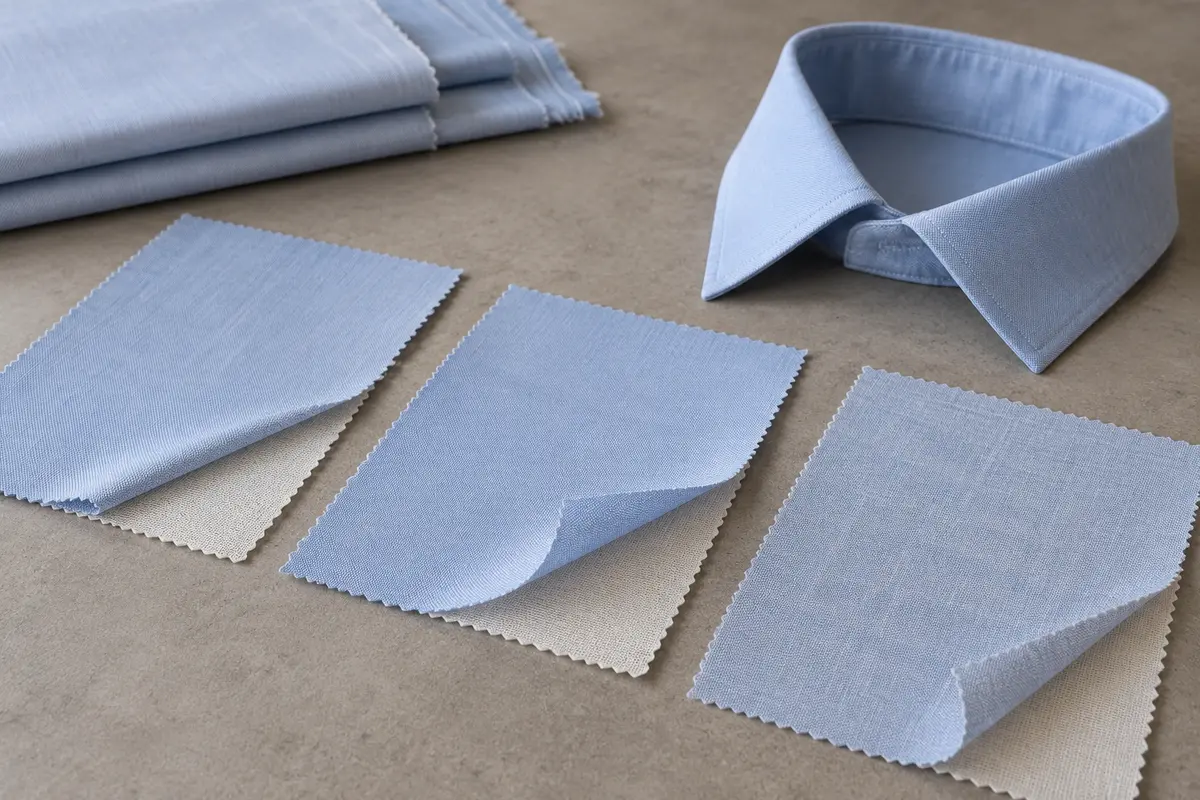
Changing to a heavier buckram is not always the answer. The checks below help organise a trial; they do not diagnose a fault without inspecting the material and process.
| What you notice | What to investigate |
|---|---|
| A board-like collar or uncomfortable ban | Grade and finish, number of supported layers, component design and the feel of the complete sewn sample. |
| Bubbles or areas lifting after care | Bond consistency, actual fusing conditions, fabric compatibility and the specified wash/dry process. Ask for sample assessment before changing settings. |
| Adhesive marks or visible texture on the face | Face-fabric weight and openness, coating suitability and process conditions. Compare an alternative grade on the same fabric. |
| Puckering or a changed shape | Dimensional change in both materials, cutting direction, sewing and handling. Compare fused and sewn samples separately. |
Ask for a care specification, not just “washable”
“Washable buckram” is incomplete information. Ask about the temperature, detergent, drying method, number of cycles and acceptance criteria for the intended garment. Do not copy a high-temperature claim from one article to another, or assume the interlining’s capability overrides the care limits of the face fabric.
For an agreed domestic-laundering test, ISO 6330:2021 provides washing and drying procedures for textile testing. It is a test-procedure reference, not a blanket pass certificate for a product. Industrial laundering or a buyer-specific protocol may require a different agreed method.
Keep chemical-safety documentation separate from performance testing. OEKO-TEX STANDARD 100 concerns testing for harmful substances; it does not replace a collar bond or wash-performance assessment. If certification is required for an order, request the current certificate and verify that its scope covers the supplied article. This guide makes no article-specific certification claim.
Send a useful enquiry—and get a useful shortlist
At Sadiq Interlinings, the most useful starting point is the garment you are making. Whether you source locally in Pakistan or for an international production programme, tell us what the finished component needs to do.
Include the face-fabric composition and weight if known, the component, desired finish, colour, width, approximate quantity and destination. Add the intended care routine and your fusing equipment. A reference sample or clear photographs can help explain the target appearance; final approval still needs a physical trial.
A message you can copy
“We need buckram for [collar / cuff / kurta ban / placket]. Our face fabric is [composition and weight]. We want [soft / medium-hard / hard] support in [White / Black / Off White], with [width] and approximately [quantity]. The garment will be cared for by [wash and drying method]. Please suggest articles for sampling and confirm the current technical guidance.”
If you need material supplied for component cutting, also explore our collar and cuff cutting rolls and confirm the format with your enquiry.
Discuss your fabric & request samples
Prefer WhatsApp? Use the chat button on this page and mention the garment component and article codes you would like to compare.
Questions buyers ask about collar buckram
Is buckram the same as lining fabric?
Not in this context. Garment buckram or interlining provides support within selected components. Lining generally forms an inner layer that covers the inside of a garment. When ordering, specify woven fusible collar interlining rather than relying on “lining” alone.
Which buckram is best for shirt collars?
The best choice is the grade that gives the required shape, comfort and care performance with your particular shirting. Compare a small selection of finishes, then approve a sewn and washed collar. There is no single best GSM for every shirt.
Can shirt-collar buckram also be used for kurta ban or patti?
A suitable woven fusible grade can be considered for those components, but assess the neckline’s comfort and the patti’s flexibility separately. The grade approved for a formal shirt collar may feel too rigid in a lighter kurta.
Is cotton buckram always better than a polyester-cotton blend?
No. Fibre composition is one part of the specification, not a quality ranking. Compare the construction, finish, coating and tested behaviour with the face fabric. The three articles in this guide have cotton bases; a PC-blend article is a separate specification and should be assessed on its own merits.
Can fusible buckram be washed?
Use the selected article’s care guidance and validate the fused garment under its intended washing and drying routine. Fusible does not automatically mean suitable for every wash temperature, industrial-laundry process or dry-cleaning method.
Where can I source collar buckram in Pakistan?
Sadiq Interlinings is based in Gujranwala, Pakistan. Contact us with your fabric and component requirements to discuss the appropriate woven fusible articles, sample availability and order details. For overseas enquiries, include the destination and any buyer-specific testing requirements.
Technical note: Product details in this guide reflect the listed article specifications at the time of preparation. Confirm the current technical sheet, availability and order-specific requirements with Sadiq Interlinings. Product suitability and production settings must be approved on the actual garment materials. Editorial illustrations are AI-generated, not factory photographs or evidence of product testing.