
Understanding GSM, Stiffness, and Resin Coating in Interlinings By Sadiq Interlinings
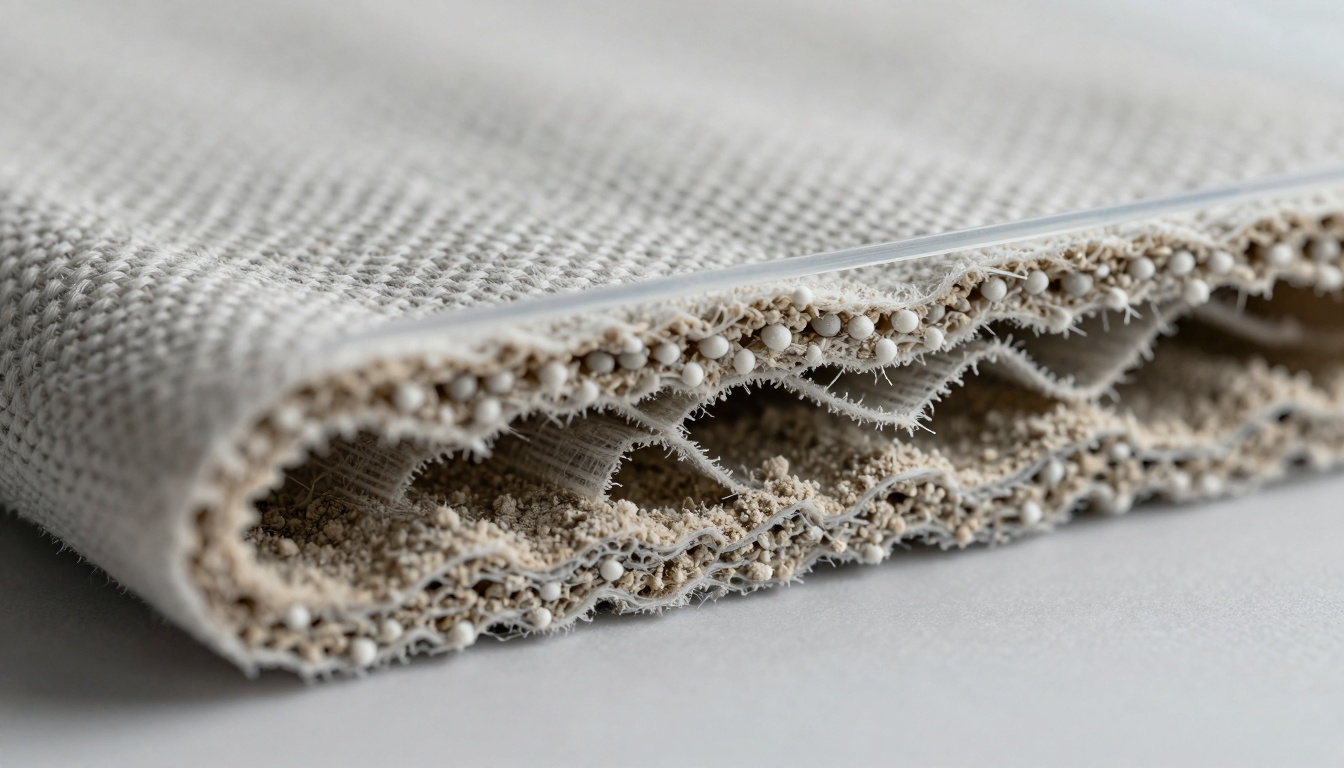
A comprehensive technical guide for garment makers, merchandisers, and textile engineers — authored with practical insight by
Sadiq Interlinings, Pakistan’s leading interlining manufacturer.
Interlinings are often invisible within a finished garment but they determine fit, appearance, durability, and perceived quality.
This deep-dive explains the three technical pillars behind interlining performance — GSM (grams per square meter),
stiffness, and resin coating — and shows how they interact. You will learn how to choose combinations
for specific garments, how Sadiq Interlinings engineers products that meet exacting export standards, and which tests validate
quality in production.
The article includes practical selection tables, testing protocols, manufacturing insights, sustainability considerations, and
specific product suggestions from our catalog — including
Woven Fusible Interlinings,
Non-woven Interlinings,
Embroidery Backing, and premium Buckram.
Quick summary
GSM measures weight and influences perceived thickness; stiffness controls shape and hand; and resin coating provides bonding and long-term stability.
The right blend equals a durable, well-performing garment.
What GSM means and how it’s measured
GSM, or grams per square meter, is the standard unit used to express fabric weight. Unlike casual phrasing — “heavy” or “light” — GSM
is an absolute measurement: take a one-square-meter sample and weigh it. The number you get is the GSM. For interlinings, this metric
is crucial because it correlates directly to bulk, thermal insulation, opacity, and the ability to provide body to garments.
How GSM is measured
- Cut a precisely measured specimen (the industry often uses 100cm² or 1m² for direct GSM).
- Dry the specimen to standard conditions (temperature and humidity) to avoid variance from moisture.
- Use calibrated scales accurate to 0.01 grams for finer GSM ranges.
- If smaller specimens are used, scale proportionally: weight (g) × 10 = GSM for 100cm² specimens.
Sadiq Interlinings maintains ISO-aligned lab conditions for GSM measurement and documents every production batch. This is why our specification
sheets list GSM ranges with tight tolerances — manufacturers depend on that precision to automate cutting, pressing, and finishing.
Why GSM matters beyond “weight”
The GSM number gives clues to:
- Hand and drape — lower GSM tends to drape better; higher GSM increases body.
- Fusibility behaviour — heavier interlinings often require more aggressive fusing parameters.
- Durability and abrasion resistance — more substantial weights handle stress and repeated laundering better.
- Bulk and thickness — affects seam allowances and finished garment silhouette.
To inspect our GSM-controlled products, see our category pages:
Woven Fusible Interlinings,
Non-woven Interlinings,
and a detailed look at our
Buckram and Collar Solutions.
Stiffness: metrics, methods, and effect on garments
Stiffness is the interlining’s resistance to bending. There are different test methods — Shirley stiffness, bending length, and flexural rigidity — each with its own units. Conceptually, stiffness governs how collars stand, how cuffs keep a crisp edge, and whether lapels maintain shape.
Common stiffness tests
- Shirley stiffness test: Measures the force required to bend the sample a specific angle; used widely for interlinings.
- Bending length: A measurement of how far a strip of fabric will extend beyond the edge of a platform under its own weight; useful for drape assessment.
- Flexural rigidity: Computed from bending tests and geometric properties; reported in N·cm or other SI units.
At Sadiq Interlinings, our QC lab runs these tests on representative lots. When customers order a collar interlining spec, we provide stiffness curves so production teams can simulate behavior on their fabrics before final approval.
How stiffness influences garment type
Practical effects of stiffness:
- Collars and cuffs: Need medium to high stiffness to appear crisp and keep their shape after repeated laundering.
- Lapel and jacket fronts: Require graded stiffness so the edge is structured while the rest drapes correctly.
- Soft garments: Use low stiffness for comfortable, fluid drape in women’s wear and casual shirts.
Our engineering team can tune stiffness via yarn, weave density, bonding (for nonwovens), and controlled resin application. That’s why we ask for final fabric specifications when customers request samples — stiffness interacts with the outer fabric’s hand in ways that are not obvious from the interlining alone.
Resin coating: chemistry, application, and quality control
Resin coating converts a base cloth into a fusible interlining. These resins are typically thermoplastic polymers or co-polymers that melt under heat and pressure to bond the interlining to the outer fabric. Common chemistries include polyethylene (PE), polyamide (PA), ethylene-vinyl acetate (EVA), and specialized co-polymer blends.
Types and formulations
Each resin family brings different properties:
- Polyethylene (PE): Cost-effective, good basic adhesion; tends to be softer.
- Polyamide (PA): Higher heat tolerance, stronger bond; used in premium shirting where durability matters.
- EVA/Co-polymers: Tunable melting ranges and tack; often used when a specific fusing window is required.
Application methods
Resins are applied using several methods:
- Roller coating: Controlled application for even, repeatable coats — common at commercial scales.
- Spray coating: Used for specific patterns or partial coatings.
- Extrusion coating: For heavier coatings and dense resin layers used in buckram.
- Heat-calender fusing: A fused film is laminated to the interlining via heated rollers for very uniform bonds.
Sadiq Interlinings uses precision roller and calender systems with closed-loop controls to ensure resin pick-up and coat weight meet spec. That reduces batch-to-batch variability and prevents issues such as bubbling or weak adhesion during production at garment factories.
Coating weight and its effects
Coating weight (expressed in g/m² or percent pickup) directly influences stiffness, bond strength, and wash durability. Higher coat weight increases stiffness and bond strength but may reduce drape and increase hand harshness. Precision matters: marginal differences of 5–10 g/m² can be noticeable in high-end shirts.
For product examples, see our technical pages:
Fusible Interlining and
Woven Fusible Interlinings.
How GSM, stiffness, and resin interact — and why combinations matter
Too often decisions are made using single attributes: “give me a 120 GSM interlining.” That’s a start, but the final product depends on the entire system. A 120 GSM woven interlining with a soft resin will behave differently from a 120 GSM nonwoven with a hard, dense coating.
System-level examples
- Lightweight shell + heavy interlining: Can cause the garment to feel bulky and misaligned at seams.
- High-GSM interlining + low-resin coat: High body but poor adhesion — risk of delamination after washing.
- Low-GSM interlining + high-resin coat: Can feel crunchy and reduce wearer comfort while still providing good adhesion.
For these reasons Sadiq Interlinings offers system recommendations — pre-matched GSM, weave/bonding, and resin loadouts — that garment manufacturers can trial on small production runs before scaling up. We also provide test reports demonstrating fusing window, washability, and stiffness retention.
Practical selection guide — which interlining for which garment
Below are pragmatic suggestions based on garment type. These are starting points; the final choice should always be validated with a sewn sample and wash testing.
Shirts (casual and formal)
- Casual shirts: 40–80 GSM; soft to medium stiffness; low-to-medium resin content for comfortable drape.
- Formal shirts: 70–150 GSM; medium-to-firm stiffness for collars and cuffs; premium PA or co-polymer resins for durable bonds.
Jackets and structured wear
- Lapels and fronts: 100–250 GSM; graded stiffness (firmer at the edge, softer inward) with careful resin control.
- Interfacing for shoulder pads: Heavier GSM, supporting resin, and specialized lamination techniques.
Caps, hats, and accessories (buckram-type)
- Buckram brims and crowns: 180–385 GSM; extra-stiff finish with high coat weight and extrusion or lamination resin processes to provide permanent stiffness.
Embroidery backing and industrial uses
- Tear-away backing: Lightweight, minimal resin, optimized to release cleanly after embroidery.
- Cut-away and water-soluble backings: Engineered for heavy embroidery where stabilization matters most.
Looking for ready-to-order specs and sample requests? Visit our product pages:
Fusible Interlining,
Woven Fusible Interlinings,
Non-woven Fusible Interlinings,
and Embroidery Backing.
Testing, QC, and laboratory methods
Reliable performance requires repeatable tests. Below are the key verifications Sadiq Interlinings performs before goods ship.
Pre-shipment QC tests
- GSM verification: Standardized specimen method, calibrated balances, and environmental control.
- Coat weight/percent pickup: Determines resin quantity and correlates with stiffness and adhesion.
- Adhesion or bond strength: Peel tests following ISO methods to quantify how well the interlining bonds to common outer fabrics.
- Stiffness and bending tests: Shirley or bending length to quantify hand and shape retention.
- Wash and crocking tests: Repeated laundering to ensure bond durability; colorfastness if applicable.
We ship every order with a QC certificate that lists batch-level test results. If you need a custom test matrix for a specific brand standard, our quality team will assemble it and run trials before bulk production.
Production notes — how Sadiq Interlinings manufactures consistent quality
Sadiq Interlinings combines modern looms and bonding lines with automated coating systems. Key features of our production:
- Precision looms: tight tolerances for woven interlinings to ensure dimensional stability.
- Automated coating lines: closed-loop pickup control to maintain coat weight within tight specs.
- Calender and lamination: for uniform fusible film application in premium lines.
- Inline quality sensors: detect coating defects early to prevent rejects.
- Technical support & sampling: small-batch samples and lab test results provided before bulk runs.
Our manufacturing scale supports large export programs while keeping consistency. You can read more about our capabilities on the About and home pages.
Sustainability, compliance, and certifications
Environmental and compliance considerations are fundamental to modern sourcing. Sadiq Interlinings maintains recognized certifications and sustainable practices:
- OEKO-TEX Standard 100: ensures absence of harmful substances in textile articles.
- ISO 9001 quality management: documented processes that enforce consistency and corrective action.
- Energy-efficient machinery: modern equipment reduces energy per meter produced.
- Waste reduction and recycling: initiatives to re-use offcuts and reduce landfill.
We also collaborate with buyers to create lower-impact resin formulations and explore biodegradable bonding systems where technically feasible. Contact our sustainability team via
the contact page for specific requests.
FAQ and troubleshooting
Q: My collars bubble after fusing. Why?
A: Bubbling commonly results from incorrect fusing temperature/pressure/time profile or uneven resin coat weight. Request a technical consultation and we’ll supply a recommended fusing window and sample to match your fabric.
Q: I need a softer feel for women’s wear. Which product?
A: Choose low GSM, low-resin fusible interlinings. Our non-woven range includes soft-hand options optimized for flow and comfort.
Q: Can you produce custom widths and colors?
A: Yes. We offer custom widths, GSM targets, and dyed/off-white/black finishes. Submit an RFP or sample request on our
Contact Page.
Why Sadiq Interlinings is your authority for interlinings
Sadiq Interlinings is built around consistency, engineering rigor, and customer partnership. We serve local and international brands with
strict quality demands. Our capabilities include ISO-aligned testing, advanced coating and calender systems, and traceable batch reporting.
Sample requests & technical support
Request custom samples, technical data sheets (TDS), and test reports. Use our
contact form or email the technical team for expedited assistance.
Browse our product pages for spec sheets and to order samples:
- Fusible Interlining
- Woven Interlinings
- Non-woven Interlinings
- Embroidery Backing
- Sadiq Interlinings Home
Get technical help
Email: info@sadiqinterlining.com
Location: Behind Sui Gas Transmission Office, Sheikhupura Road, Gujranwala, Punjab, Pakistan.