
Why Quality Interlinings Matter in Mass Production and Export Garment Units
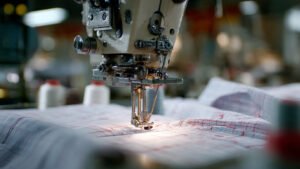
Why Quality Interlinings Matter in Mass Production and Export Garment Units
A comprehensive guide to understanding how premium interlinings drive efficiency, reduce defects, and protect brand reputation in high-volume manufacturing brought to you by Sadiq Interlinings, Pakistan’s trusted partner for export-grade interlining solutions.
In the competitive world of garment manufacturing, especially in mass production and export-oriented units, every component matters. While fabrics, trims, and accessories often receive primary attention, interlinings remain the unsung heroes that determine whether a garment meets international quality standards or becomes a costly rejection. This comprehensive guide explores why investing in quality interlinings is not just important but essential for modern garment factories, merchandisers, and quality control teams working with global brands.
Mass production environments operate on tight margins, strict timelines, and zero-defect targets. A single batch of substandard interlinings can cascade into production delays, rework costs, customer chargebacks, and damaged supplier relationships. Understanding the critical role of quality interlinings helps factories optimize their supply chain, reduce waste, and consistently deliver garments that pass the most rigorous inspection protocols used by international buyers.
Throughout this article, we will examine real production scenarios, cost-benefit analyses, quality control frameworks, and technical specifications that define superior interlinings. We will also showcase how
Sadiq Interlinings supports export units with reliable, certified products including Woven Fusible Interlinings, Non-Woven Fusible Interlinings, Embroidery Backings, and specialized Collar and Cuff Cutting Rolls.
Key takeaway
Quality interlinings are the foundation of garment integrity. They directly impact production efficiency, defect rates, washing durability, and ultimately customer satisfaction. In mass production, compromising on interlining quality creates exponential problems across thousands of units.
The production impact of interlining quality
In a mass production garment unit processing 50,000 to 200,000 pieces monthly, interlinings touch multiple critical stages of the manufacturing process. The quality of these materials directly influences production flow, machine efficiency, labor productivity, and final garment quality. Understanding this impact helps justify investment decisions and supplier partnerships.
Fusing efficiency and machine uptime
Quality interlinings with consistent resin coating thickness and uniform base fabric ensure smooth fusing operations. Poor-quality interlinings create immediate problems including uneven adhesion requiring temperature adjustments, resin migration that dirties fusing plates and belts requiring frequent cleaning, variable fusing windows that slow down production as operators constantly adjust parameters, and increased machine maintenance due to resin buildup and contamination.
A factory running three fusing machines at capacity can lose 15 to 25 percent efficiency when working with inconsistent interlinings. This translates to hundreds of lost production hours monthly and delayed shipment schedules that damage buyer relationships.
Sewing line productivity
Interlinings affect sewing operations more than most managers realize. High-quality fused components behave predictably under needle penetration, maintain dimensional stability during handling, feed smoothly through machines without drag or bunching, and create consistent seam quality that minimizes rework. Inferior interlinings cause needle deflection and breakage, fabric puckering at seams, inconsistent stitch formation requiring tension adjustments, and increased operator fatigue from fighting unstable materials.
For collar and cuff assembly lines specifically, using precision-engineered products like our Collar and Cuff Cutting Rolls ensures operators can maintain target SAM values without quality compromises. Pre-cut components from reliable materials reduce variability and support lean manufacturing principles.
Finishing and pressing operations
The final pressing stage reveals interlining quality issues that were masked earlier in production. Quality interlinings respond uniformly to heat and pressure, maintain bond integrity through multiple pressing cycles, enhance garment appearance with appropriate body and hand, and resist delamination or bubbling under finishing conditions. Poor interlinings create visible defects at the final inspection stage including bubbling and wrinkling that cannot be corrected, uneven surface appearance from inconsistent fusing, edge lifting at collar points and cuff edges, and dimensional changes that affect final garment measurements.
These finishing-stage defects are particularly costly because the garment has already absorbed significant labor and material investment. Rejection at this stage means maximum waste and rework expense.
True cost analysis: cheap vs. quality interlinings
The initial price difference between budget interlinings and quality certified products from manufacturers like Sadiq Interlinings might seem significant when purchasing thousands of meters. However, total cost of ownership analysis consistently demonstrates that quality interlinings deliver superior value in mass production environments.
Direct cost components
When calculating true interlining costs, factories must account for material price per meter, wastage percentage from defects and quality issues, rework labor for correcting fusing and sewing defects, rejected finished goods that cannot be salvaged, and expedited shipping costs when production delays occur.
A typical scenario comparison shows instructive differences. Budget interlinings might cost $0.15 per meter with 8 to 12 percent wastage from defects, 5 percent finished garment rejection rate, significant rework labor averaging 3 to 5 percent of units, and periodic production delays requiring air freight. Quality interlinings from certified suppliers cost $0.22 per meter with 1 to 2 percent wastage from normal cutting optimization, under 0.5 percent finished garment rejection rate, minimal rework under 0.5 percent, and consistent on-time delivery.
Hidden cost multipliers
Beyond direct costs, poor interlining quality generates hidden expenses that seriously impact profitability. These include quality control labor spending excessive time inspecting and sorting materials, delayed shipments triggering penalty clauses in buyer contracts, damaged reputation leading to reduced order allocation from buyers, increased working capital tied up in defective inventory, and management time consumed troubleshooting recurring quality issues.
For a medium-sized export unit producing 100,000 shirts monthly, the difference between budget and quality interlinings often exceeds $15,000 to $25,000 monthly in total impact, despite the raw material price difference being only $7,000. The multiplier effect of quality issues on operational efficiency and buyer relationships cannot be overstated.
ROI calculation framework
Progressive factory managers calculate return on investment for quality interlinings by measuring baseline defect rates and costs with current materials, conducting controlled trials with certified quality interlinings like
Woven Fusible Interlinings or Non-Woven Fusible Interlinings tracking all cost components including hidden factors, and calculating net savings over a three to six month period.
Most factories discover ROI exceeding 300 to 500 percent within the first year of switching to quality-certified interlinings. The investment pays for itself through reduced waste, improved efficiency, and enhanced buyer satisfaction that leads to increased order volumes.
Defect prevention and rejection reduction
Quality interlinings serve as the first line of defense against common garment defects that cause buyer rejections. Understanding the relationship between interlining specifications and specific defect modes enables proactive quality management rather than reactive firefighting.
Common interlining-related defects
The most frequent quality issues traced to inferior interlinings include bubbling and delamination after washing from inadequate resin quality or uneven coating, stiffness variation between garments from inconsistent GSM or resin pickup, color migration or strike-through from incompatible resin chemistry, dimensional instability causing pattern distortion from poor base fabric construction, edge lifting at collars and cuffs from insufficient adhesion at stress points, and pucker and wrinkle formation from mismatched interlining and fabric properties.
Each of these defects triggers costly consequences in mass production. A single defect type affecting just 2 percent of production represents thousands of defective garments requiring rework or disposal. Quality interlinings engineered for specific applications virtually eliminate these systematic defect modes.
Wash durability and performance retention
Export buyers specify rigorous wash testing protocols, often requiring garments to withstand 5, 10, or even 20 industrial wash cycles without degradation. Quality interlinings must maintain bond strength through repeated laundering, preserve dimensional stability without shrinkage or growth, retain appropriate stiffness and hand characteristics, resist delamination and bubbling under thermal stress, and prevent color migration or contamination.
Premium products from Sadiq Interlinings undergo extensive wash testing during development and production validation. Our Woven Fusible Interlinings consistently pass 20-plus wash cycles in standardized testing, providing the durability export buyers demand and end consumers expect.
Dimensional stability and pattern integrity
Garment fit depends on pattern accuracy maintained throughout production and product lifetime. Interlinings with poor dimensional stability introduce shrinkage or growth that distorts patterns, causing collar points to curl or spread, cuff widths to change affecting button placement, front panels to wave or pucker, and overall silhouette to deviate from specification.
Quality interlinings are engineered for minimal dimensional change under fusing heat, storage conditions, and washing stress. This stability ensures patterns behave predictably and finished garments maintain their designed appearance through the product lifecycle.
Meeting export quality standards and compliance requirements
International buyers impose strict compliance requirements covering chemical safety, environmental impact, and performance standards. Interlinings must meet these specifications or risk cargo holds, chargebacks, and loss of business relationships. Quality suppliers maintain certifications and testing capabilities that support compliance from procurement through final inspection.
OEKO-TEX and chemical compliance
OEKO-TEX Standard 100 certification verifies absence of harmful substances in textile products. Major buyers increasingly require this certification for all components including interlinings. Non-compliant materials can trigger cargo rejection at destination ports, creating catastrophic financial consequences for exporters.
Sadiq Interlinings maintains OEKO-TEX certification across our product range including Non-Woven Fusible Interlinings, Woven Fusible Interlinings, Embroidery Backings.
Every shipment includes certification documentation that streamlines buyer approval and customs clearance.
Performance testing and buyer specifications
Beyond chemical compliance, buyers specify performance criteria including bond strength measured by peel tests, wash durability through accelerated laundering cycles, dimensional stability under heat and moisture, colorfastness to washing, rubbing, and perspiration, and appearance retention after specified use cycles.
Quality interlining suppliers provide test reports documenting performance against these standards. Sadiq Interlinings operates ISO-aligned testing laboratories capable of running buyer-specified protocols and supplying certified test data with every bulk shipment. This documentation is essential for merchandisers compiling technical packages for buyer approval.
Traceability and lot control
Modern supply chain management demands complete traceability from raw materials through finished goods. When quality issues emerge, factories must identify affected production lots quickly and accurately. Quality interlining suppliers maintain rigorous lot numbering systems, retain samples from every production batch, document all test results by lot number, and provide certificates of conformance with shipments.
This traceability enables rapid response when buyers identify concerns, supporting corrective action and preventing broader supply chain disruptions. Budget suppliers rarely offer comparable documentation and traceability capabilities.
Technical requirements for different garment categories
Mass production units typically manufacture diverse garment categories, each demanding specific interlining characteristics. Understanding these technical requirements enables informed material selection that optimizes both production efficiency and finished garment quality.
Formal and casual shirts
Shirt production represents a major volume category for export units. Collar and cuff applications require interlinings that provide crisp appearance through multiple wash cycles, maintain shape without excessive stiffness, fuse cleanly without bubbling or strike-through, and support efficient high-speed production processes.
Formal shirts typically use woven interlinings in the 70 to 150 GSM range with medium to firm stiffness for professional appearance. Casual shirts employ lighter weights from 40 to 90 GSM with softer hand for comfort. Our Collar and Cuff Cutting Roll are pre-engineered for shirt manufacturing efficiency, providing consistent quality components that eliminate cutting variability and reduce waste.
Jackets and structured outerwear
Tailored garments demand sophisticated interlining engineering to achieve proper drape, shape retention, and wearing comfort. Front panels often require multiple interlining layers with graduated stiffness, lapels need specialized canvas constructions, and shoulder areas require structured support without bulk.
Quality woven interlinings from our specialized range offer the control and precision necessary for jacket manufacturing. These products undergo extensive testing to ensure they perform reliably in complex garment constructions requiring multiple fusing operations.
Casual wear and sportswear
Comfort-focused garments require interlinings that enhance appearance without compromising wearing ease. Nonwoven interlinings excel in these applications, offering soft hand, excellent drape, economical pricing for budget-conscious programs, and consistent performance across large production runs.
Our Non-Woven Fusible Interlinings and Thermal Bonded Non-Woven Interlinings provide manufacturers with reliable options across weight ranges from ultra-light to medium-heavy constructions. These products support efficient production while delivering the comfort characteristics sportswear consumers expect.
Embroidered and decorated garments
Embroidery applications introduce unique technical requirements. Backing materials must stabilize fabric during high-speed machine embroidery, prevent stitch distortion and puckering, support dense thread coverage without show-through, and remove cleanly without damaging the garment or decoration.
Sadiq Interlinings offers comprehensive Embroidery Backing solutions including tear-away, cut-away, and specialty formulations for challenging applications. These products enable decorators to achieve consistent quality across large production volumes while minimizing material costs and setup time.
Selecting the right interlining supplier for export manufacturing
The relationship between garment manufacturers and interlining suppliers significantly influences production success. Beyond price negotiations, supplier selection should evaluate technical capabilities, quality systems, supply reliability, and partnership approach. The right supplier becomes a strategic asset supporting business growth rather than just a commodity vendor.
Critical evaluation criteria
When assessing potential interlining suppliers, experienced merchandisers and production managers examine manufacturing capabilities and capacity to support growing order volumes, quality management systems including ISO certification and documented processes, testing and laboratory facilities for validating product specifications, technical support availability for troubleshooting and product development, and supply chain reliability with consistent delivery performance.
Additional important factors include certification portfolio covering OEKO-TEX and buyer-specific requirements, customization capability for developing specialized products, financial stability ensuring long-term partnership viability, and communication infrastructure supporting responsive service.
Red flags indicating problematic suppliers
Certain warning signs predict future supply chain problems. Manufacturers should be cautious of suppliers unable to provide certification documentation, offering prices significantly below market suggesting quality compromises, lacking testing capabilities requiring blind trust in product claims, showing inconsistent delivery patterns indicating production instability, and demonstrating poor technical knowledge about their own products.
These red flags often correlate with quality issues, supply disruptions, and costly production problems. While premium suppliers may command higher initial pricing, their reliability and technical competence deliver superior total value.
The supplier audit process
Progressive factories conduct supplier audits before establishing relationships. The audit process typically includes facility inspection reviewing manufacturing equipment and processes, quality system review examining documentation and control procedures, laboratory verification confirming testing capabilities and calibration, sample evaluation testing products under actual production conditions, and reference checks with existing customers about performance history.
Sadiq Interlinings welcomes factory audits and maintains comprehensive documentation supporting quality verification. Our company profile and manufacturing heritage demonstrate our commitment to transparency and continuous improvement in serving export-oriented manufacturers.
Quality control protocols for incoming interlinings
Even when sourcing from reputable suppliers, factories must implement incoming quality control protocols to verify material conformance before production use. These checks prevent defective materials from entering production where they would cause expensive downstream problems.
Visual and physical inspection
Initial inspection should verify proper labeling and documentation, absence of visible defects including stains, tears, or coating irregularities, consistent width throughout the roll, uniform appearance across the entire lot, and appropriate packaging preventing contamination or damage.
Random sampling from multiple rolls within each lot provides statistical confidence about overall quality. Inspection under proper lighting conditions helps identify subtle defects that might be missed in poor visibility.
Performance testing protocols
Critical performance characteristics require verification through testing including GSM measurement confirming weight specification, fusing trials at actual production parameters, bond strength evaluation through peel testing, stiffness measurement if specification is critical, and wash testing for durability verification on representative samples.
Factories should establish acceptance criteria based on buyer requirements and production experience. Materials failing to meet these standards should be quarantined and addressed with the supplier before production use.
Production trial validation
When introducing new interlining lots or suppliers, conducting small production trials before bulk cutting reduces risk. Trial runs typically involve processing 50 to 100 garments through complete production including fusing, sewing, finishing, and inspection to validate material behavior under actual conditions.
Monitoring machine behavior, operator feedback, and finished garment quality during trials identifies potential issues before they affect thousands of units. Successful trials provide confidence for full-scale production.
Real-world case studies from export manufacturing units
Practical examples demonstrate how interlining quality decisions impact production outcomes and business results. These anonymized case studies illustrate common scenarios faced by export-oriented garment manufacturers.
Case study: shirt manufacturer overcomes rejection crisis
A medium-sized shirt manufacturer producing 80,000 pieces monthly for European buyers faced escalating rejection rates reaching 12 percent due to collar bubbling and delamination after washing. Investigation revealed they had switched to budget interlinings to reduce costs by $0.08 per garment.
The factory partnered with Sadiq Interlinings to source certified Woven Fusible Interlinings specifically engineered for their fabric and wash specifications. After implementation, rejection rates dropped to under 1 percent, fusing efficiency improved by 18 percent, and customer satisfaction increased leading to 30 percent higher order allocation. The improved interlining cost $0.20 more per garment but saved $1.85 per piece in total costs while strengthening buyer relationships.
Case study: jacket manufacturer achieves consistency breakthrough
A tailored clothing manufacturer struggled with inconsistent jacket appearance caused by variable interlining stiffness between production lots. This variability forced operators to constantly adjust fusing parameters and resulted in 8 percent rework rates for appearance issues.
By implementing consistent quality standards and sourcing engineered Woven Fusible Interlinings with documented stiffness specifications and lot traceability, the manufacturer achieved standardized production parameters across all shifts, reduced rework to under 2 percent, improved operator productivity by 15 percent, and enhanced garment consistency praised by buyers during final inspections.
Case study: sportswear producer optimizes embroidery operations
A sportswear manufacturer running high-volume embroidery operations experienced frequent production stoppages from backing material issues including difficult removal causing fabric damage, inconsistent stabilization leading to design distortion, and excessive waste from poorly engineered products.
After switching to specialized Embroidery Backing products from Sadiq Interlinings, the operation achieved 25 percent faster embroidery speeds from improved stabilization, virtually eliminated fabric damage during backing removal, reduced backing material costs by 18 percent through optimized consumption, and improved embroidery quality consistency across production runs.
The Sadiq Interlinings advantage for export manufacturers
Sadiq Interlinings has built its reputation serving Pakistan’s export garment industry with products and services specifically engineered for mass production requirements and international quality standards. Our comprehensive approach addresses the complete spectrum of manufacturer needs from technical specifications through supply chain reliability.
Manufacturing excellence and quality systems
Our manufacturing facilities employ modern production equipment including precision looms for consistent woven base fabrics, automated coating systems with closed-loop control, calendering and lamination equipment for uniform resin application, and inline quality monitoring to detect defects before shipment.
ISO 9001 quality management systems ensure documented processes, corrective action protocols, and continuous improvement culture. Every production lot undergoes rigorous testing before release, with certification documentation provided to customers supporting their own quality verification and buyer approvals.
Comprehensive product portfolio
Sadiq Interlinings maintains extensive product ranges covering every major garment category and application including:
Woven Fusible Interlinings for structured garments and premium applications.
Non-Woven Fusible Interlinings for comfort-focused casual wear.
Spun Bond Non-Woven Fabrics for industrial and specialty applications.
Embroidery Backings in tear-away, cut-away, and specialty formulations.
Collar and Cuff Cutting Rolls for efficient shirt manufacturing.
Thermal Bonded Non-Woven Interlinings for specialized performance requirements.
This breadth enables manufacturers to consolidate interlining procurement with a single trusted supplier, simplifying logistics and strengthening partnership relationships.
Technical support and development partnership
Beyond product supply, Sadiq Interlinings provides comprehensive technical support including fusing parameter optimization for specific fabric combinations, troubleshooting assistance when production issues emerge, custom product development for unique application requirements, wash testing and performance validation against buyer specifications, and sample provision for trial production before bulk commitments.
Our technical team understands the pressures of export manufacturing where delays and quality issues create cascading consequences. We respond quickly to support requests and work collaboratively to solve problems rather than deflecting responsibility.
Supply reliability and service excellence
Consistent delivery performance enables manufacturers to maintain lean inventory while avoiding production stoppages. Sadiq Interlinings maintains adequate stock levels of standard products, operates flexible production scheduling to accommodate urgent requirements, provides accurate delivery commitments with transparent communication, and implements quality control to prevent shipment of defective materials.
Learn more about our capabilities and commitment on our About page, explore our Company profile, and understand our manufacturing heritage serving Pakistan’s textile industry.
Implementation guide for upgrading interlining quality
Transitioning from commodity interlinings to quality-focused sourcing requires systematic planning and execution. This implementation guide provides factory managers and merchandisers with a proven roadmap for successful transitions that minimize disruption while capturing quality and efficiency benefits.
Phase 1: Assessment and baseline establishment
Begin by documenting current state performance including defect rates by type and garment category, rework and rejection costs, fusing efficiency and machine uptime, operator feedback on material handling, and buyer feedback and claim history.
This baseline provides objective measurement for evaluating improvement after implementation. Many factories discover their actual quality costs exceed initial estimates once comprehensive tracking begins.
Phase 2: Product selection and sampling
Work with Sadiq Interlinings technical team to identify appropriate products for your specific applications. Request samples of recommended materials along with technical data sheets and test reports. Conduct laboratory testing on samples to verify specifications, then run production trials processing complete garments through all operations.
Compare trial results against baseline performance, gathering feedback from operators, quality inspectors, and if possible, buyers reviewing sample garments. This validation builds confidence before bulk implementation.
Phase 3: Staged rollout and monitoring
Rather than switching all production simultaneously, implement staged rollout beginning with specific product lines or buyer programs where quality issues have been most problematic. Monitor key performance indicators during rollout including defect rates, efficiency metrics, and cost impacts.
Document improvements and address any unexpected issues promptly. Successful initial rollouts build organizational confidence for broader implementation across remaining product categories.
Phase 4: Standardization and continuous improvement
Once quality interlinings are fully implemented, establish standardized specifications for each garment type, implement incoming inspection protocols to verify material conformance, train operators on optimized fusing and handling parameters, and maintain ongoing communication with Sadiq Interlinings for continuous improvement.
Regular performance reviews identify opportunities for further optimization whether through material adjustments, process refinements, or new product adoption as your garment mix evolves.
Frequently asked questions for merchandisers and production teams
Q: How much do quality interlinings actually cost compared to budget alternatives?
A: Premium interlinings typically cost 20 to 40 percent more per meter than budget alternatives. However, total cost analysis including reduced waste, lower rejection rates, and improved efficiency consistently demonstrates 3 to 5 times ROI within the first production year. The apparent price premium disappears when measuring total cost of ownership.
Q: Can we use the same interlining across all our garment styles to simplify procurement?
A: While tempting for simplicity, using application-specific interlinings optimizes both cost and performance. Formal shirts require different characteristics than casual wear, and jackets need sophisticated interlining engineering that would be wasteful in simple applications. Sadiq Interlinings can help rationalize your product range to balance variety against procurement efficiency.
Q: How do we handle buyer-specified interlining requirements in our orders?
A: Many international buyers specify particular interlining brands or performance criteria. Contact our technical team via the Contact page with buyer specifications. We can often provide compliant alternatives or work directly with buyers to secure approval for our certified products that meet or exceed their requirements.
Q: What minimum order quantities do you require for custom developments?
A: Standard products are available in quantities suitable for trial production starting from single rolls. Custom developments require larger commitments typically beginning around 5,000 to 10,000 meters depending on specification complexity. Contact us to discuss your specific requirements and we will provide detailed quotations.
Q: How quickly can you supply materials for urgent production requirements?
A: Standard products maintained in inventory can typically ship within 2 to 5 business days. Custom specifications or large volume orders require production lead time ranging from 2 to 4 weeks depending on current capacity. We recommend planning interlining procurement at order placement rather than waiting until cutting to avoid production delays.
Q: Do you provide technical training for our production staff on fusing best practices?
A: Yes, Sadiq Interlinings offers on-site technical support including fusing parameter optimization, troubleshooting assistance, and operator training for proper material handling. These services help manufacturers maximize the performance benefits from quality interlinings while avoiding common application errors.
Partner with Sadiq Interlinings for export manufacturing excellence
Quality interlinings are fundamental to competitive advantage in export garment manufacturing. They enable factories to meet international standards, reduce costly defects, improve production efficiency, and build lasting relationships with demanding global buyers. Sadiq Interlinings combines manufacturing excellence, comprehensive product portfolios, technical expertise, and reliable service to support your success in competitive markets.
Request samples and technical consultation
Our technical team is ready to analyze your specific requirements and recommend optimal interlining solutions. Request samples, technical data sheets, and pricing through our contact page or reach out directly for expedited support.
Explore our complete product range and technical resources:
- Woven Fusible Interlinings — Premium structured support
- Non-Woven Fusible Interlinings — Comfort and efficiency
- Spun Bond Non-Woven Fabrics — Industrial applications
- Embroidery Backings — Stabilization solutions
- Collar and Cuff Cutting Rolls — Manufacturing efficiency
- Thermal Bonded Non-Woven Interlinings — Specialty performance
- Technical Blog — Industry insights and best practices
- Sadiq Interlinings Home — Complete company overview
Contact our technical team
Email: info@sadiqinterlining.com
Location: Behind Sui Gas Transmission Office, Sheikhupura Road, Gujranwala, Punjab, Pakistan